Most Common Questions Patients Ask Before LASIK Surgery
It’s completely normal to feel nervous before LASIK surgery.
For most people, the idea of improving vision without depending on glasses sounds exciting, but it also comes with a lot of questions. Patients usually want to know whether the surgery is painful, how long recovery takes, whether the results are permanent, and most importantly, whether they are even suitable for it.
At Jehan Eye Clinic, Dr. Kareeshma Wadia often meets patients who have been thinking about lasik eye surgery for years but delay it because of confusion or fear. Interestingly, once they understand the procedure properly, most of that fear becomes much smaller.
If you’ve been searching online and still feel unsure about LASIK, here are some of the most common questions patients ask before moving ahead with surgery.
What Is LASIK Surgery and How Does It Work?
LASIK is a vision correction procedure that helps reduce dependence on glasses or contact lenses. It works by reshaping the cornea so that light enters the eye properly and focuses clearly on the retina.
People commonly undergo laser eye surgery for:
- - Minus power
- - Plus power
- - Cylindrical power
The procedure itself is usually quick. Most patients are surprised when they realize the surgery takes much less time than they expected.
Modern LASIK technology has also become far more advanced compared to earlier years. Today, there are different types of laser corrective eye surgery available depending on the eye condition and vision requirements.
These include:
- - Blade LASIK
- - Bladeless LASIK
- - Contoura Vision
- - WaveLight Plus
Advanced technologies like Contoura and WaveLight Plus help create more customized treatment plans by mapping the eye more precisely.
Many patients considering lasik eye surgery often compare it with contact lenses before making a decision. While contact lenses offer temporary vision correction, LASIK is designed as a long-term solution that can reduce daily dependence on lenses, cleaning routines, and maintenance.
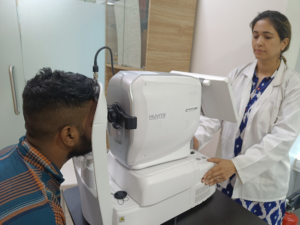
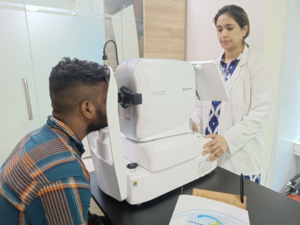
At Jehan Eye Clinic, every LASIK consultation starts with detailed eye testing because not every patient’s eyes behave the same way.
Am I the Right Candidate for LASIK Eye Surgery?
This is probably the biggest question people ask during consultation.
The simple answer is not everybody is suitable for LASIK.
Many patients assume that if they wear glasses, they can automatically undergo surgery. But before recommending refractive surgery, doctors check several important things like:
- - Corneal thickness
- - Eye dryness
- - Stability of eye power
- - Overall corneal health
- - Lifestyle and work routine
For example, someone with very thin corneas may not be the best candidate for LASIK even if their power is stable.
This is why proper eye checkup and evaluation matters so much.
For people searching for an ophthalmologist in vile parle, Dr. Kareeshma Wadia spends time understanding both the patient’s eye condition and expectations before suggesting any procedure.
What Are the Different Types of Refractive Surgery Available?
A lot of people think LASIK is the only vision correction procedure available, but that’s not actually true.
LASIK is just one type of refractive eye surgery.
Depending on the patient’s eye condition, doctors may suggest:
- - LASIK
- - PRK
- - SMILE
- - ICL
Each procedure works differently.
- - LASIK
This is the most commonly known procedure where the cornea is reshaped using laser technology.
- - PRK
PRK is often considered for patients with thinner corneas where LASIK may not be ideal.
- - SMILE
SMILE is a minimally invasive procedure usually recommended for certain types of minus power.
- - ICL
If LASIK, PRK, or SMILE are not suitable, some patients can still qualify for ICL surgery. In this procedure, a special lens is placed inside the eye to improve vision
And yes, there are cases where even ICL can not be advisable. In those situations, continuing with glasses can genuinely be the safest option.
That’s something many patients don’t expect to hear, but a good surgeon focuses on what is safest for your eyes long-term, not simply pushing surgery.
5 Common Questions Patients Ask Before LASIK Eye Surgery
1. Is LASIK Painful?
This is usually the first fear patients mention.
During the procedure, numbing eye drops are used, so most people don’t actually feel pain. Some mild irritation or watering can happen afterward for a few hours, but it usually improves quickly.
In fact, many patients later say the anxiety before surgery felt worse than the procedure itself.
2. Is LASIK Permanent?
LASIK permanently reshapes the cornea, so the correction itself is long-lasting.
However, natural age-related changes can still happen later in life. For example, reading glasses after the age of 40 are still common even in people who previously had LASIK.
Patients visiting Dr Kareeshma, trusted eye doctor in vile parle often ask whether their power can completely return after surgery. In suitable candidates, results are generally stable for many years.
3. How Long Does Recovery Take?
Recovery after laser eye treatment is usually faster than most people expect.
Many patients return to work within a couple of days. Doctors can still advise avoiding swimming, heavy workouts, dust exposure, or excessive screen time during the early healing phase.
Vision typically continues settling gradually over the next few weeks.
4. Is LASIK Safe?
Modern LASIK technology is considered highly advanced when performed after proper eye evaluation.
But like any medical procedure, proper screening is important.
Many patients searching online for an eye clinic near me focus mainly on pricing, but factors like doctor experience, technology, and diagnosis are equally important.
A detailed eye examination helps identify whether surgery is genuinely safe and suitable for your eyes.
5. What If I’m Not Eligible for LASIK?
This is another very common concern.
Not being suitable for LASIK doesn’t always mean you have no vision correction options. Depending on your eye condition, PRK, SMILE, or ICL can still be possible.
And sometimes, continuing with glasses can honestly be the healthiest long-term decision.
Dr. Kareeshma Wadia believes patients should fully understand all options before making a decision instead of feeling rushed into surgery.
What Should You Expect Before and After LASIK Surgery?
Before surgery, detailed eye tests are done to check corneal thickness, tear film quality, vision stability, and overall eye health.
Patients who wear contact lenses are often advised to stop using them for a few days before testing because lenses can temporarily affect corneal measurements.
After surgery, temporary dryness, watering, glare, or mild light sensitivity can happen for some time during healing. These symptoms usually improve gradually.
At Jehan Eye Clinic patients are guided throughout the process so they understand what recovery realistically feels like instead of feeling unprepared afterward.
Visit Jehan Eye Clinic for Advanced LASIK Eye Surgery Consultation in Vile Parle
If you’ve been considering LASIK but still have questions, getting a proper consultation can make things much clearer.
At Jehan Eye Clinic, patients receive detailed evaluations and personalized guidance for LASIK and other vision correction procedures based on their eye condition and lifestyle.
The clinic also offers advanced laser eye surgery, cataract treatment, cornea care, dry eye treatment, glaucoma services, and routine eye checkups under expert supervision.
Consulting an experienced eye doctor in vile parle can help you understand which vision correction option is actually safest and most suitable for your eyes, whether that’s LASIK, ICL, or simply continuing with glasses comfortably.

Jehan Eye Clinic is a center for skilled clinical excellence, and aims at being at par with the latest technology at all times. It is headed by Dr Kareeshma Wadia-Havewala, who is a specialist in Cataract, Cornea and Refractive Surgeries.
Quick Links
Contacts
Opening Hours
- Monday — 10am – 7pm
- Tuesday — 10am – 7pm
- Wednesday — 10am – 7pm
- Thursday — 10am – 7pm
- Friday —10am – 7pm